Airlines, ground handlers, and the gap between them
The airline sold you a sector. The ground handler runs a different company. Your shipment lives in the argument between them.
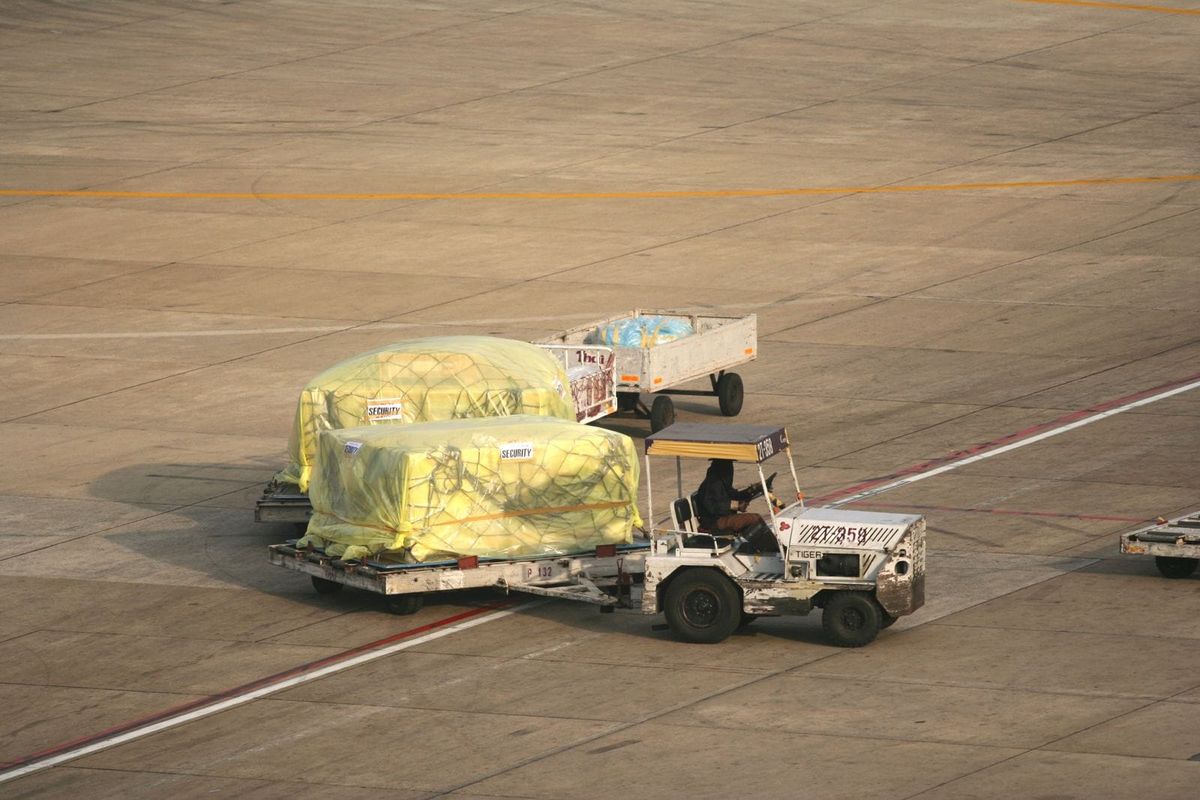
There's a stretch of concrete at every airport that nobody puts in the customer deck. The aircraft is on one side. The warehouse is on the other. In between is a ground handler, a set of dollies, a window, and a set of assumptions about who is looking at your freight.
Brands talk about airlines. Operators learn to talk about the gap.
I work cross-border special projects across six markets. Air shows up constantly, because that's how a lot of this region still moves when you need it faster than a boat and smaller than a full charter story. The part that breaks is rarely the flight number. The part that breaks is the stretch after the door opens and before your 3PL, or your broker, or your station, has the shipment in a system they actually run.
The airline sold you a sector. The ground handler runs a different company. Your shipment lives in the argument between them.
The wrong product
The wrong question is which airline is best. Sometimes that matters. AOG, capacity, the way a carrier treats a commodity. The useful question is who owns the minutes after wheels on, and what "handed over" means in writing, not in a WhatsApp.
I've watched shipments that flew perfectly and then sat. The tracker still says in transit, or arrived, or some other word that is doing too much work. The airline believes they are done. The handler is waiting on a document, a truck slot, a breakdown, a customs hold that isn't quite a hold yet. The brand thinks the 3PL has it. The 3PL thinks the origin agent has it. Nobody is lying. Nobody is holding the seam.
That's not a scandal. That's how the industry is built. Airlines are not 3PLs. Ground handlers are not your account manager. Brokers are not last mile. If you design an operating model that assumes those are one organism, you will spend your life in the gap, paying for time you thought you'd bought.
What the gap looks like on a Tuesday
It looks like a ULD that landed and hasn't been broken down because the station is on a different peak than your flight. It looks like a paper MAWB that is correct enough until it isn't. It looks like a trucker who cannot enter until a release that sits with a person who already left. It looks like Singapore being clean and the next airport in the six-market set being a different sport.
It looks like everyone having a scan except the scan that would tell you the shipment is on the floor, not on the plane, not on the truck, just on the floor.
From inside a 3PL you see this as a lane design problem. From the brand side you see it as "air is unreliable." Air is pretty reliable. The choreography around air is not, unless someone wrote it down and named an owner for each step, including the steps that are not your employees.
You cannot contract away a seam you refused to name
People try. They buy a door-to-door product and feel better. Sometimes that product is real. Sometimes it's four vendors wearing one invoice. The invoice does not close the concrete. If your exception process starts when the parcel is in your warehouse, you have designed a process that begins after the expensive failures.
Write the chain. Airline. Handler. Broker. Linehaul. Station. What does each one send, to whom, when the previous one is "done." What does done mean. Who notices if it isn't. That's ugly work. It's also the only work. Special projects, in my seat, is often just making that chain visible enough that the core team is not asked to telepath it.
If your SOP starts at the warehouse door, your SOP is late.
Six airports are not one airside
Do this in Singapore and you can get spoiled. Do this across the markets we actually run and you get six versions of the gap. Different handlers. Different hours. Different ideas of a document. Different relationships between the people who fly the metal and the people who drag the dollies. A regional SOP that says "recover from air" is not an SOP. It's a wish.
I don't have a punctuality statistic to quote, and I won't invent one. I have the same bias I have everywhere else. Name the handoff. Don't average it. Don't assume the airline is the product. The product is the chain. The chain includes people who do not work for you and do not care about your launch date.
If your air cargo "keeps going missing," look at the concrete, not the logo on the tail. That's where the minutes go. That's where the P&L goes. That's the gap. Close it in writing or keep paying rent on it.