Exceptions are the job
The happy path is the easy part. The 8 percent in the corner is the job, and at 5,000 parcels a day it is a department you forgot to hire.
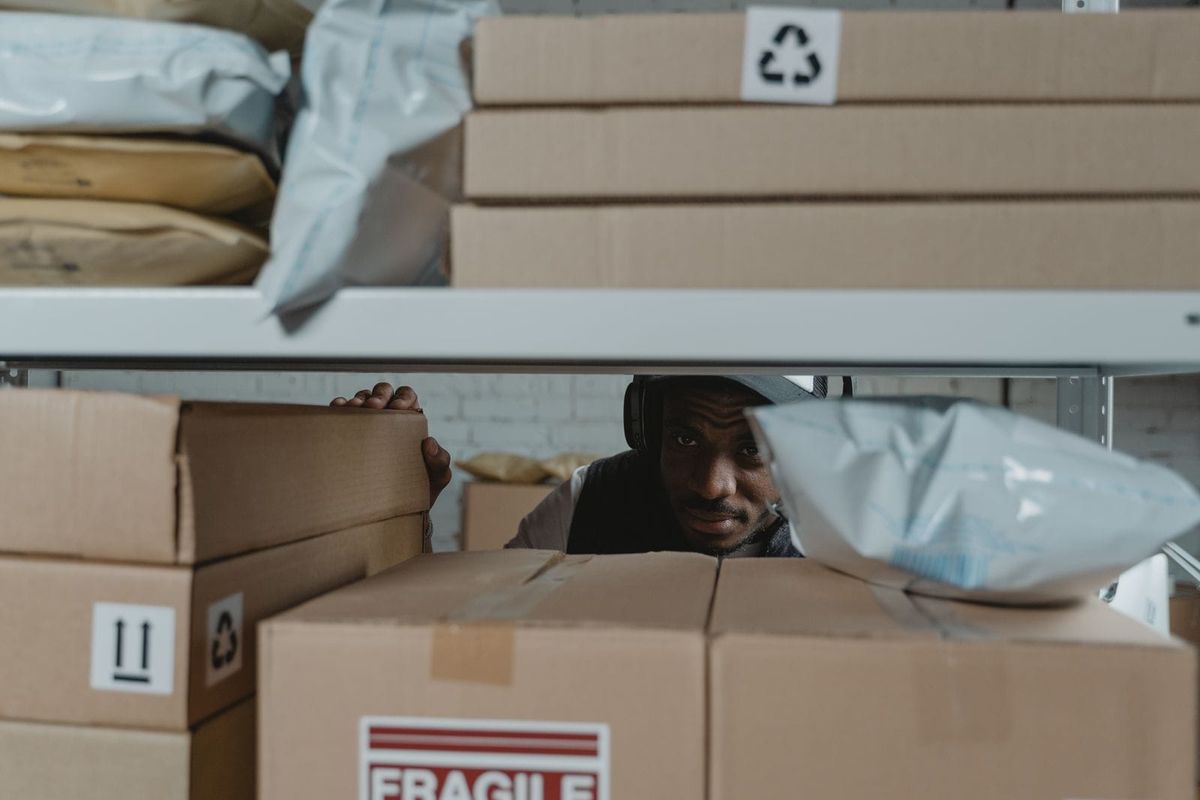
Walk a warehouse that is "running well" and you will be shown the happy path. Cartons on a belt. A scan that beeps. A pack bench with tape. The supervisor will talk about throughput. Then you will notice the corner. A pallet of problem totes. A trolley of labels that didn't print. A person sitting at a laptop, arguing with a marketplace about an order that should have left yesterday.
That corner is the operation. The belt is the easy part.
I've run days that looked fine on a rate, and nights that were lost to twenty ugly parcels. The volume wasn't the problem. The process had no place for the volume that didn't fit.
Exceptions are not a side quest. Exceptions are the job. The happy path is just the part that doesn't need you.
The 8 percent that eats the week
Most networks will tell you that 90-something percent of parcels fly through. That number is used to soothe people. It should scare you. If 8 percent of 500 orders is a nuisance, 8 percent of 5,000 is 400 conversations a day. Each one needs a decision. Hold, reroute, refund, reship, wait for customs, call the customer, kill the label, make a new one.
Those decisions are the product. A customer does not remember your happy path. They remember the week you went silent because the exception sat in a queue with no owner.
Brands design for the 92 percent. They staff for the 92 percent. They buy software for the 92 percent. Then they are confused that the ops lead looks tired. The ops lead is not tired from packing. They are tired from being the process for everything the process ignored.
What an exception actually is
It is not a mystery. It is a case the SOP didn't name. Failed address. No ID for a high-value COD. Short pick. Damaged carton. Duplicate barcode. Marketplace cancellation after cut-off. HS code query. Customer not answering. Rider couldn't find the building. Return without a reason. Inventory that the screen swears is there and the bin says is not.
Every one of those has a correct next action. If you have not written the next action, a human will invent one, differently, every shift. That invention is why your data is garbage. Three people used three different statuses for the same event because the real status didn't exist.
I've sat inside a 3PL and watched a brand get angry at "poor performance" that was actually unbriefed exceptions. The partner ran the happy path they were sold. The ugly path was never in the SOW. So it went into a WhatsApp group, then into a backlog, then into a customer complaint that arrived as a surprise in a QBR.
Design the ugly on purpose
The operators who sleep are not luckier. They treat exceptions as a product line. They list them. They give each one an owner, a time limit, and a default. The default is the important part. When nobody is around to be clever, what happens.
Failed delivery: how many attempts, then where does it sit, who tells the customer, who pays the extra loop. Customs hold: who is allowed to answer a query, with what documents, in what window. Short pick: ship partial, hold, or cancel, and who decides based on what.
Write it like a grown-up. Not a 40-page SOP nobody reads. A one-pager a shift lead can use at 9pm. If it needs a meeting, it is not an exception path. It is still a debate. Debates do not scale.
If the only person who can handle the ugly pile is your best operator, you do not have a process. You have a hero, and heroes take leave.
Software will not rescue an unnamed pile
A WMS can create an exception queue. It cannot decide. If you configure 40 exception codes and no default actions, you have built a museum of problems. Pickers will scan the first code that looks close. Your reporting will become a novel.
Same with a 3PL portal. A ticket is not a process. A ticket is a place for a process to fail in public. Agree the path, then put the ticket on it. Not the other way around.
And stop hiding exceptions inside a green SLA. On-time can be true while 8 percent of customers are in hell. Average is how you lie to yourself. Segment the ugly. Time it. Put a name next to it. If you cannot see it, you cannot staff it, and if you cannot staff it, it will staff you.
The goal was never a clean belt
The goal was an operation that still makes a decision when the parcel doesn't fit the drawing.
Walk the corner of the warehouse first. Name the pile. Give it a clock and an owner. Then worry about throughput, software, and the rate card. The happy path will be fine. It always is. Your week is hiding in the 8 percent. Treat it like the job, because it is.